The Misunderstanding of Freedom in Fashion
There’s a common assumption that freedom in clothing means looseness. Lack of structure. Complete flexibility.
But the body doesn’t actually feel most free when it’s unsupported.
It feels free when it’s held just enough.
Why the Body Responds to Structure
Structure provides orientation.
It gives the body reference points. It helps distribute weight. It creates a sense of stability.
Think about the difference between:
– a loose garment that floats without definition
– a structured piece that frames the body
The second often feels more grounding, even if it appears more controlled.
The Fine Line Between Support and Restriction
Not all structure is beneficial.
Rigid design forces the body into a fixed shape. It resists movement and creates pressure in the wrong places.
Supportive design, on the other hand, adapts.
It maintains form while allowing movement. It provides guidance without control.
This balance is what makes structure feel empowering instead of limiting
Harness Design as an Example of Adaptive Structure
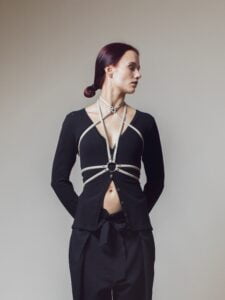
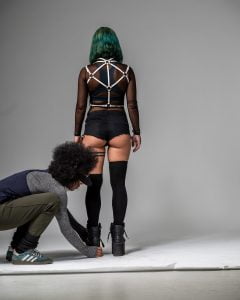
Harnesses sit directly on the body, which makes them particularly sensitive to this balance.
When designed well, they:
– distribute tension evenly
– stay in place without compressing
– frame the body without restricting it
They offer structure that moves.
This is what allows them to feel both stable and free at the same time.
Why Structure Creates Confidence
Confidence is often described as a mental state, but it has a strong physical component.
When the body feels supported, posture stabilizes. Movement becomes more intentional. Breathing deepens.
This creates a feedback loop:
Physical stability → mental ease → confident behavior
Structure is not the opposite of freedom.
It is what allows freedom to exist without chaos.